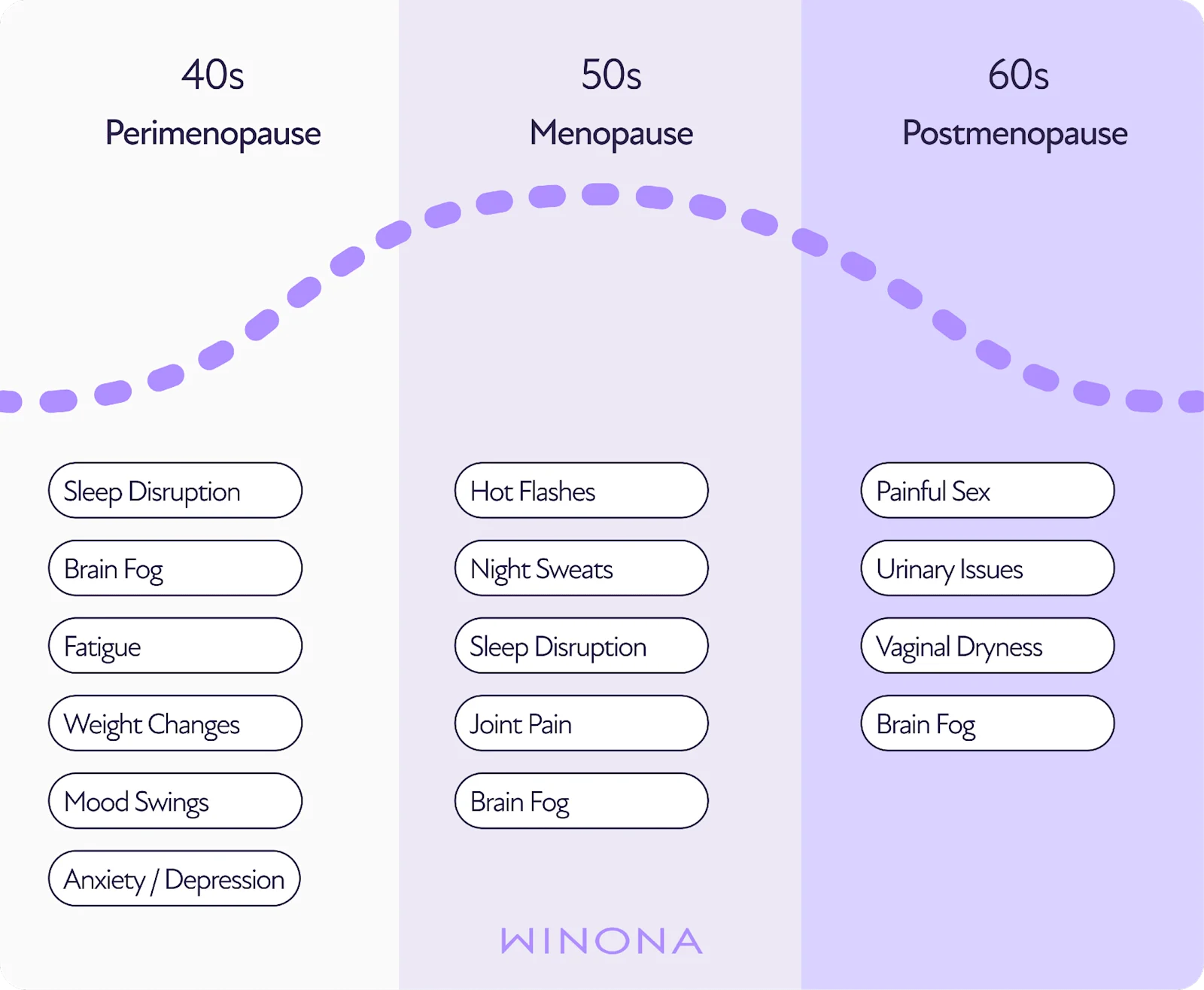
Over 80% of women navigating the menopausal transition experience symptoms.(7) With more than 100 known symptoms, let’s break down the most common menopause symptoms into groups based on which body systems are affected.
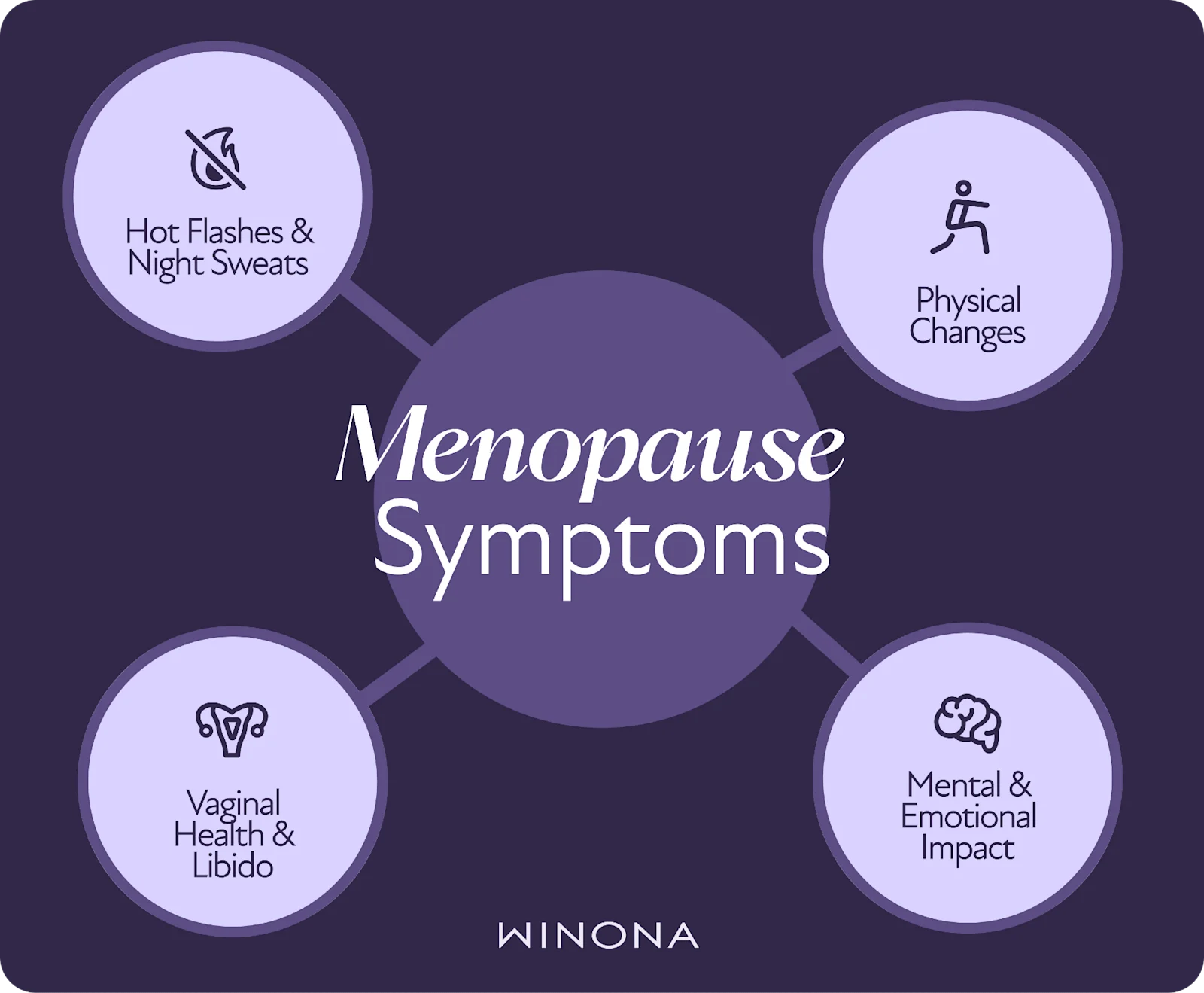
Vasomotor Symptoms
Vasomotor symptoms are the most common symptoms of menopause. It’s believed that drops in estrogen alter the body’s system of thermoregulation.(13) Menopausal vasomotor symptoms include the following:(12)
Hot Flashes: You may experience a sudden wave of heat in the chest, neck, or face that can last anywhere from less than one minute to more than five minutes. This can also be accompanied by intense sweating, chills, or flushing. The frequency of hot flashes varies, with some women experiencing upwards of ten a day.
Night Sweats: These involve excessive nighttime sweating that can leave your sheets drenched and interrupt sleep.
Mental & Emotional Impact
Menopause doesn’t only affect the body. It can also affect emotional and mental health in the following ways:(12)
Mood Swings: Your mood may shift suddenly throughout the day from feelings of happiness to sadness to irritability.
Anxiety: Estrogen helps regulate your body’s “fight-or-flight” stress response. As estrogen levels fall, you may feel increased fear, worry, or anxiety.
Depression: Women who experience more intense menopausal symptoms may be more prone to depression during perimenopause.
Sleep Problems: Night sweats and increased stress can make it harder to fall and stay asleep. It’s also not uncommon for sleep disorders to develop during this phase of life.
Physical Changes Throughout Your Body
Menopause can have wide-reaching effects across the entire body:(12)(14)(15)(16)(17)
Irregular Periods: Your periods will become more irregular as you progress from early perimenopause to late perimenopause.
Joint & Muscle Pain: You may feel joint or muscle aches as hormonal shifts cause structural changes to your body’s tissues.
Weight Gain: You may notice weight gain around your midsection, as low estrogen levels can affect metabolism, appetite, and weight distribution.
Hair & Skin Changes: Due to the drop in estrogen levels, your hair may start falling out and become thinner. These hormonal changes also cause dry skin as it loses collagen and elasticity. As a result, you may notice the appearance of fine lines and wrinkles.
Changes in Vaginal Health and Libido (GSM)
The following symptoms are part of what’s called the genitourinary syndrome of menopause (GSM):(12)
Vaginal Dryness: The vaginal tissues become thinner and drier as estrogen levels decline, making it harder for the vagina to self-lubricate.
Painful Sex: Vaginal dryness and irritation may cause physical discomfort during sex (dyspareunia).
Urinary Incontinence: Estrogen deficiency can cause the muscles of the pelvic floor to weaken, increasing the risk of bladder leaks.
Low Libido: It’s common to lose interest in sexual activity due to mood changes, vaginal dryness, or painful sex.